Born 28th June 1964 – Died 14th August 2013
Born 28th June 1964 – Died 14th August 2013
Hello. As Most of you probably know, my name is Ben and Stephen was my father. First of all, I would like to thank you all for coming out to this memorial and celebration of his life. It means a lot to our family to know that my Dad has so many people who cared for him and are here for our support. I am here today to say a few words in tribute.
All throughout my life I have looked up to my dad for advice and intellectual strength and have always admired his adventurous spirit.
However, not only did I see my dad as a parent and teacher but I also considered him a true friend
As a boy I would constantly ask him questions… about stars and space, about electricity, circuit boards and computers, why the flame and shape of a candle is the way it is… he would usually go above and beyond the detail I ever expected and would leave me a with lasting knowledge of the world.
Later on. My mum would tell me about my dad’s ability in reasoning and clarity of thought when they took their Maths degrees together.
I really only appreciated this when I came home from university one weekend, quite stuck on a method of proof for one of my upper level math courses. I showed the problem to Dad, who almost immediately said “Oh neat! I’ve never seen this before, it’s a rather interesting way to look at things.”
Almost instantly, he showed me 2 different ways I could solve my problem using what he learned just moments ago, and taught me how to understand the principle and use it for myself with clarity and ease.
It wasn’t only in mathematics did his intellect shine but in everything he did. He had a great ability to see the big picture yet grasp all the minute details without getting lost and it is something I try to emulate to this day…
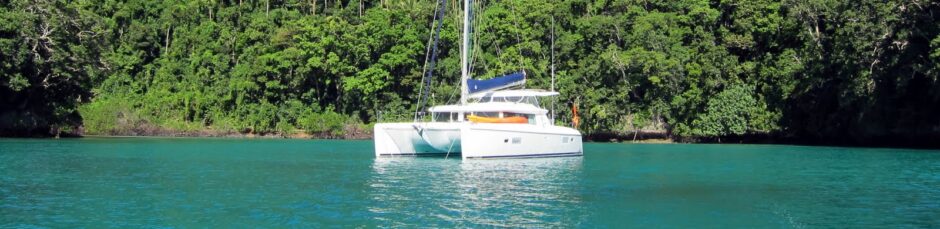
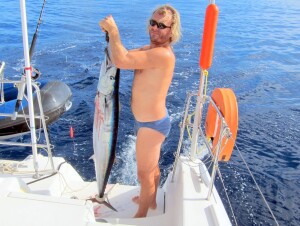
Luckily for my brothers and myself we each got to spend time with Mum and Dad on their adventure around the world on their boat Dignity not as parents and child but as companions. I have many fond memories of the 6 months I spent in the Pacific with them and I feel my dad and I became quite close friends during that time. We spent many fruitless nights on our quest to find lobsters in the spiky coral at night. Usually we would come back empty handed and hungry but it would just increase our desire to find the best spot for the next hunt. We would spearfish together under the boat in the early morning to catch our lunch for the day. He taught me how to navigate by the stars, by projecting circles onto the earth from the angle and known orbits of points in the night sky. In the evenings we would get quite drunk of the super cheap but delicious Central American rum that was stashed in the hulls, and discuss logic puzzles with themes such as “how to catch a spy on an infinite one dimensional line” or “how to escape from prison using light switches”. I got to see parts of the world that I would unlikely see otherwise and I was and still am greatly appreciative of this time I got to spend with my parents as companions.
Not only was my father an intellectual mentor but he had a fearlessness, curiosity and strength when dealing with the physical world.
He once told me that when growing up, he would see James Bond on the television and say to himself, I want to be able to do all of that! I’m pretty sure he achieved his goal. He learned how to snowboard, how to sail, scuba dive, skydive, abseil, ride speedboats, get a black belt in karate and has even flown a fighter jet. Once on a snowy night in America we were driving home, we were about to pull in to the driveway and he looks at me and says “don’t tell your mother I did this” and proceeds to do a handbrake turn spinning the car 90 degrees and slides perfectly in line with the driveway. Somewhere in his earlier life he taught himself to drive like James Bond as well. However, there is one Bond adventure he wanted to experience but never managed to do and that was to go to space. I’m pretty sure that if he lived longer the technology and price might have been right and he would have made it up there, but it’s definitely something that I plan to do and when I’m up there looking down on our blue planet I will be thinking of him and thanking him for all he did to get me where I am.
I will not only miss the sense of adventure and intellectual curiosity that my father brought to my life, I will sincerely miss him as the caring and devoted man he was to my mother and our family. Probably the best decision of his life was falling in love with my mother, Helen, without whom his adventures in life would probably never been as great. While he never came off as the romantic type (at least to me) he did do great things to show he cared for my mother. For her 50th birthday he secretly flew all her brother and sisters into Central Park in New York city and had each of them sing to her a custom verses of Elton John’s “Your Song” while she was blind folded and in complete surprise. My parent’s marriage has shaped my view of a good relationship and I will continue to look to them as a role model for my marriage as well.
Words cannot begin to express how much I miss my father and how I will continue to miss him. It is shocking to have someone you know and love lose their life, especially when you feel like they had so much more life to give the world. However, I do find solace in the amazing memories I have of him and that he has a place in my heart and also in hearts of each and everyone of you. I truly believe that my father lives on in all of us.
I would like to end my tribute with a quote by Aleksandr Solzhenitsyn –
Some are bound to die young
By dying young a person stays young
in people’s memory.
If he burns brightly before he dies,
His brightness shines for all time
I love you Dad and I will never forget you and our time together.
***************************************************************************************************************************
By Sam Southwood
The best way to describe anyone would be to share memories…as it’s certain acts in certain scenarios which best narrates who a person is.
There’s certain memories that really stand out when I think of Dad, which seem to always hit me all at once…associations, if you will, that attaches to so many different aspects of life.
The earliest of which would be weekend mornings up in mum and dad’s room, sitting on dads back, and with a pair of tweezers I’d draw imaginary pictures or write words on his back and he’d try to guess what it was.
I remember from so long ago I thought he was this invincible giant, immune to pain and could conquer anything.
I remember the periscope he bought for me so I could see out the back windows of his dark green Alpha Romeo cos I was too small
I remember the maths times table he coded on the computer to teach John, Ben and I how to solve multiplication.
I remember the Simpsons! Two episodes back to back on Thursdays…and I’ll always associate that cartoon with him.
Watching Star Trek – playing “there!” when certain credits appear
I remember being taken to America…seeing the legendary towering skyrise of New York City with him for the first time.
I remember the lectures about my grades in school
I remember his amazing analogies…from whales in jars being thrown from a balloon to describe how gravity works, to the elephant in the box to describe objective critical thinking.
I remember snowboarding – riding as fast as I can only to see his bright yellow jacket fly past us…waiting for us at the bottom of the slope.
And the Friday night movies then Outback Steakhouse, going home to watch a TV show or documentary.
I remember that more than half of the videogames I’ve played were HIS videogames.
I remember going out for night drives in his Audi, with the roof down, blasting Rob Zombie and going to absolutely nowhere specific just for the fun of it. All his idea as well, of course.
I remember being at the dinner table, listening to him and Ben talk mathematics like speaking another language, not having a clue what they’re saying but just being amazed by Dad always having an answer for everything.
Christmas mornings, playing with presents Mum and Dad bought us….Him, playing with presents Mum and Dad bought us.
The travelling. The hikes, mountains, beaches, scuba-diving, adventures….and being spoiled with experiences, lessons, and skills.
His reasoning for learning how to sail a boat before I could drive a car.
I remember his embodiment of being proactive and hardworking to a level that I’ve never seen in anyone else.
I remember why it’s not about the right answers, it’s the right questions.
I remember that everything is difficult the first time, and everything gets easier the more you practice it.
I remember that it’s not about memorizing why things work, it’s understanding how it works.
Oh…and his puns – you can never lead a pen, but a pencil always needs to be led.
I remember that it’s certain acts in certain scenarios which best narrates who a person is. That who you are and what you do are the same thing. It’s our actions that define us, and it’s our eternal echoes that immortalize us. I remember Dad in almost everything I can do or see, and I expect I will continue to do so – which leads me to believe that Dad may no longer be here, but he’s not gone because he’ll never leave my mind and heart.
This is where I’d like to end it, but then again, there is no end to his memory.
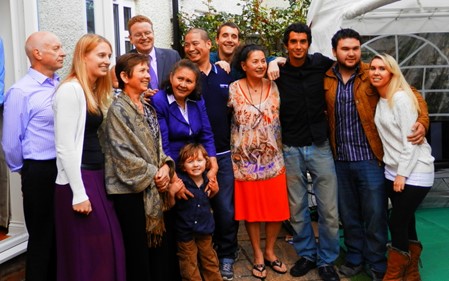 On Saturday at about 2.00 pm. I looked around my kitchen diner and out onto my garden and thought this is amazing. The marquee was up, the tables and chairs all laid out, the food overflowing and beautifully displayed, the music system all set up and the walls covered with tributes and messages for Steve. It was warm and the sun even peeped out. Members of my family had been around for hours, working away and getting everything prepared for the celebration. There were lots of noises, talks and laughter as we worked. I remembered how much Steve use to love these family get together.
Our son Ben and his new wife Amy had arrived that morning from New York and Steve’s mother and sister a few days before from South Africa, so all the immediate family were here.
Before Steve died we had talked about funerals and he was very clear about what he didn’t want and wanted. He wanted a non-religious Celebration of Life and I remember him mentioning that the Humanist Association had good ideas for celebrations. While looking through Steve’s laptop, I notice that he had booked marked The British Humanist Association and there was a page of local celebrants. I contacted a couple of them and was fortunate to find one free for the 28th of September.
With the help our celebrant Ray, I was able to structure a ceremony for Steve.
The ceremony started with everyone gathering and sitting down to “Your Song” by Elton John, which was mine and Steve’s song and significant to a particular memorable occasion which is briefly recounted by Ben in his speech.
 Ray then welcomed everyone, giving a short introduction and a brief biography of Steve
Steve’s sons Ben, Sam and John each recounted memories of their dad (which I will publish in the next blog.)
Steve’s mother Norma and sister Sue then gave their amusing account of Steve in his youth
Ray read out a couple of tributes from the many many tributes sent by friends across the seas.
Ray then recounted some of my memories.
We had about 30-40 seconds of silence in quiet reflection
We all joined in as Sam sung and played on the piano “Imagine” by John Lennon
Ray gave the closing words
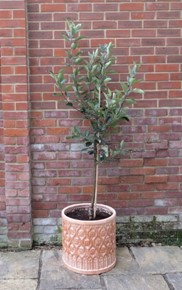
To the music: “Dignity” by Deacon Blue, I planted Steve’s apple tree, pouring his ashes with the dirt, joined by his Ben, Sam and John.
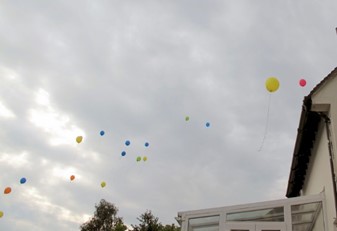 Finally we released 49 biodegradable balloons into the sky. Each of the balloon released by a friend or member of the family. One for each year of Steve’s life. The ones that Ben, Amy, Sam, John, Norma, Sue and myself released had a small amount of his ash in it.
Then we celebrated with plenty of food and drinks. It was a lovely ceremony and day. Steve would have approved.
I know I said, I would write a tribute to Steve but I have just not found words good enough to do him and my feelings justice. Maybe in the future after I have read through his blogs, I will write a book on our adventures and that will be a tribute to him.
All I can say for now is that he was the best husband, the best father, my best friend and my best love.
Steve, I love you and miss you desperately.
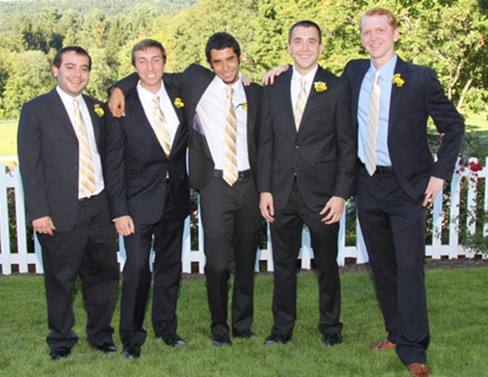
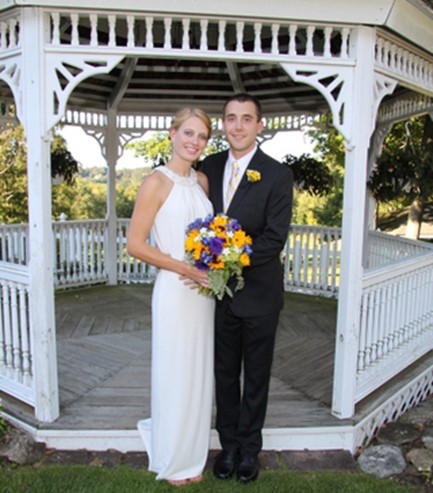
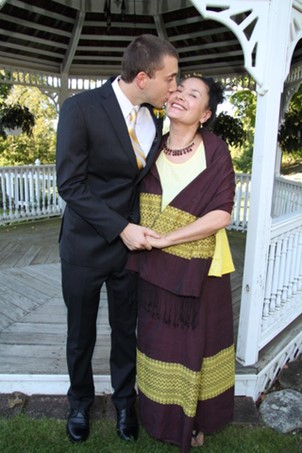
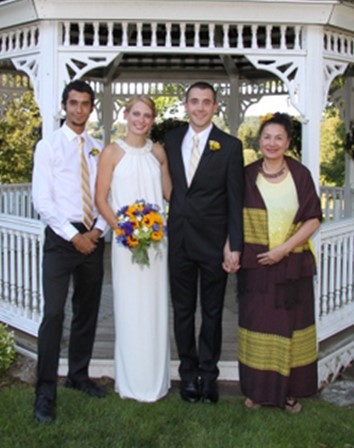
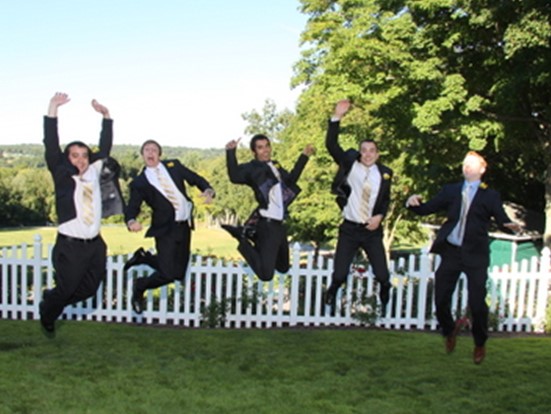
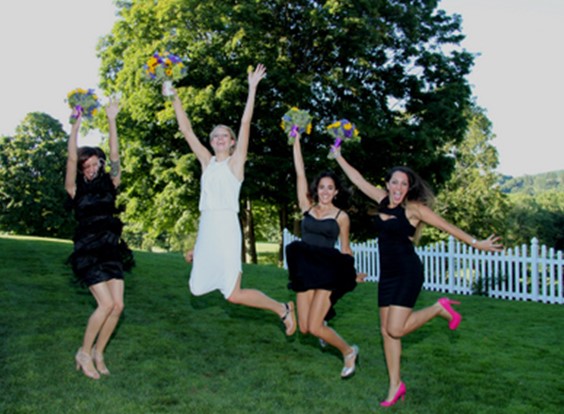
I’ve had some requests for photos of Ben and Amy’s wedding. I’m not sure how Steve use to connect to his photo album so here a just few photos which I’ve been able to insert onto the page.
The wedding was wonderful and I was so happy to have been able to be there. The weather could not have been more perfect. The ceremony was moving, emotional and joyful. The bride was so beautiful and the groom actually looked smart. The reception was certainly lively and great fun. Steve would have loved it.
So here some highlights of the day. The cake was made by the bridesmaid with the short black dress.
I’m wearing a Burmese costume which my Burmese mother use wear for special occasions.
Dear family, friends, cruisers and blog readers.
Thank you so much for all your many messages and kind words to me. It has been quite overwhelming but a real comfort too. I have always know what an amazing man Steve was but to know that so many of you felt the same was wonderful.
Today Steve will be cremated. There will be no viewing, service or ceremony today as requested by him. We will just collect his ashes. Steve’s wish was to have a really good celebration of his life and a memorial party. I have penciled this in for 28th September 2013.
My wish is to hold the celebration in the new house which Steve was so looking forward to moving into. I will be completing and moving into the new house on 12th September. This will give me time to plan and arrange something special. With barely any furniture in the house I’m hoping there will be enough room for everyone. If anyone would like to send a short reminiscent, tribute, message or photos for the ceremony please email it to SteverSouthwood@gmail.com. I would like to make some sort of display for the day.
Tomorrow I fly to America for our son Ben and Amy’s wedding which is this coming Saturday. After the sadness of this week I am looking forward to this very happy occasion. I am planning to take some of Steve’s ashes and scatter it in New York harbour. We learnt to sail there and Steve loved sailing past the wonderful NY cityscape and typical of him, dealing with all the challenges of sailing in such a busy harbour.
A week after the wedding, my son John is flying to Australia to visit with Ella and my granddaughter Bao. John plans to take some of Steve’s ashes too. He will have a small celebration there and scatter the ashes in the Brisbane bay area where Steve and I had our last sail on Dignity. Steve would love the fact that he’s still travelling around the world.
Not long ago, Steve renewed the subscription to this blog for another two years. Therefore this site will stay open for at least this time so that people can read Steve’s words and share in the adventure we had together.
After the celebration of Steve’s life, I will write one more blog. A tribute to my very very very much loved and wonderful husband.