Last year I wrote a retrospective on our first year out cruising. Once again I have been persuaded to write another one on our second year out. Two years on and what a second year. How we’ve grown as sailors and explorers. Our first year was about learning the boat, gaining further sailing experience, adjusting to living on a boat and with each other. We accomplished this sailing down the eastern Caribbean where although challenging, the waters were accurately charted, anchorages fully described, major hazards well marked and emergency help and resources generally nearby. The confidence we gained the first year certainly prepared us for the second year as we headed westward to the not so well charted waters of central America and over to the Pacific.
In our first year we traveled 2,268 nautical miles and never did more than an over night passage. In our second year we’ve covered 9,100 nautical miles, and have done many multi-day passages including a 22 day, three thousand miles Pacific crossing.
When I started outlining this blog we were anchored just behind a large reef which protected us from the ever increasing ocean waves but not from the 25 to 30 knots of wind screaming over us. We were in a remote spot miles from any form of civilization. With the sounds of crashing waves over the reef and the howling wind around us we got on with our daily routine. We were pretty  confident that our anchor was set well in and we were reasonably secure under the current condition. A year ago I would have been very, very, very unhappy.
The following morning we decided to move to another anchorage as we wanted better protection if conditions changed for the worse. We set sail in nearly 30 knots of wind, slamming into huge waves, tacking side to side, fighting currents, avoiding reefs, exposed rocks, small islands and blind roller waves. As we approached our destination we had to carefully negotiate our way through gaps in the reefs to the protected anchorage behind a small island. Always tricky in strong weather. This is also the place where less than a month ago, a couple we knew ran into the reef and sank their boat!
A year ago I would have been scared witless sailing under these conditions and would have completely panicked at seeing all the breaking waves and swells approaching our anchorage. Now days we just do it. Our time in the Tuamotus and the Society Islands taught us a great deal about entering dangerous gaps and passes into atolls and reefs. So we were aware of possible hazards and confident about our approach.
Although we’ve grown as sailors we never underestimate the dangers of the wind, sea and sailing near land. We check the weather daily, never over rely on our charts, always take visual clues, are aware of tides and current and we generally side on caution. If we become too complacent we should quit sailing.
Another big difference for most of the second year is that we’ve had a crew member on board with us. John our eldest son joined us in Panama last December and crewed with us until we reached Tahiti in June. Two weeks after John returned to England, Ben our middle son joined us and will be staying with us until we reach New Zealand. Having a third person on board has been extremely helpful especially during long passages. Sharing shifts and watches between three people during passages allows for longer sleep, more free time and keeping ones sanity!
 Having said all that, I would say that we only spend about five percent of our time out at sea. Most of the time we are safely anchored off some beautiful or interesting place, exploring the land and enjoying new sights and cultures.
This leads to the highlights of our year. Once again there are just too many. What I’ve decided to do is make a list of the countries we’ve visited in chronological order and briefly mention some of my favourite places and moments which I can remember at this moment.
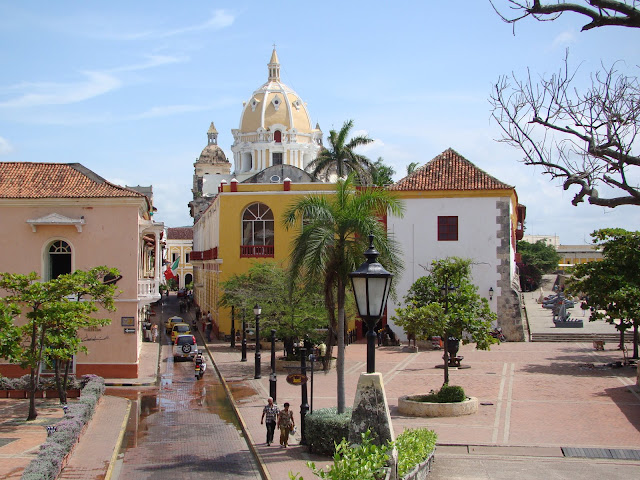
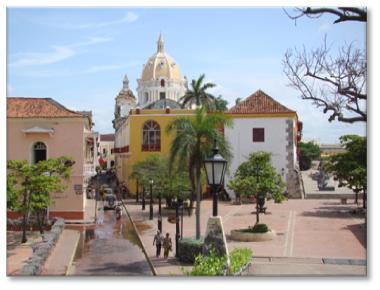
Columbia: The historic port of Cartagena, one of my favourite cities. The old city is considered one of the most beautiful on the American continent and I agree. Charming little squares, medieval style narrow streets, wonderful Spanish colonial architecture and its amazing city wall. It is also considered the safest city in Colombia so we were not too worried about being kidnapped and felt reasonably secure wandering the streets. One of the highlights during our stay there was being invited to the Colombian Navel Officers club by Derek & Martha a lovely couple we got to know there. We tried sailing on little Sunfish boats for the first time, had a wonderful lunch at the club house and explored the old fort which was exclusively inside the club’s compound.
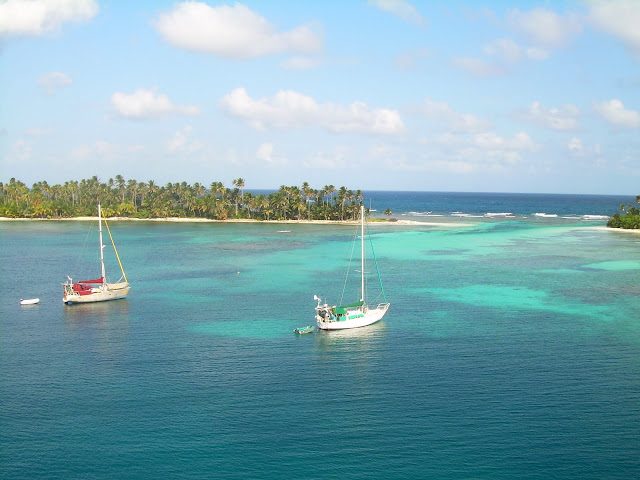
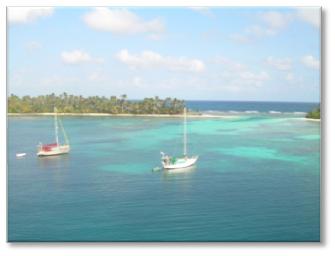 Caribbean side of Panama: We spent Christmas and New Year in the beautiful San Blas Islands. Our time made more special by having our two sons John and Sam and also Annie (Sam’s girlfriend) joining us.
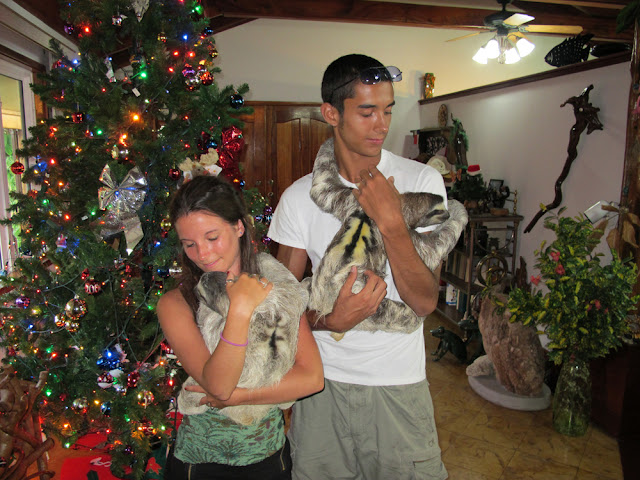
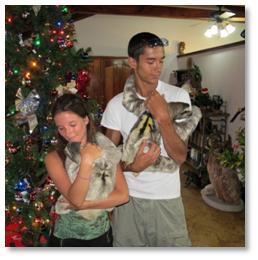
On our way down to the Panama Canal we visited a couple of ex cruisers who have rescued and adopted four sloths. Holding and cuddling those sloths kept a grin on our faces for a long time.
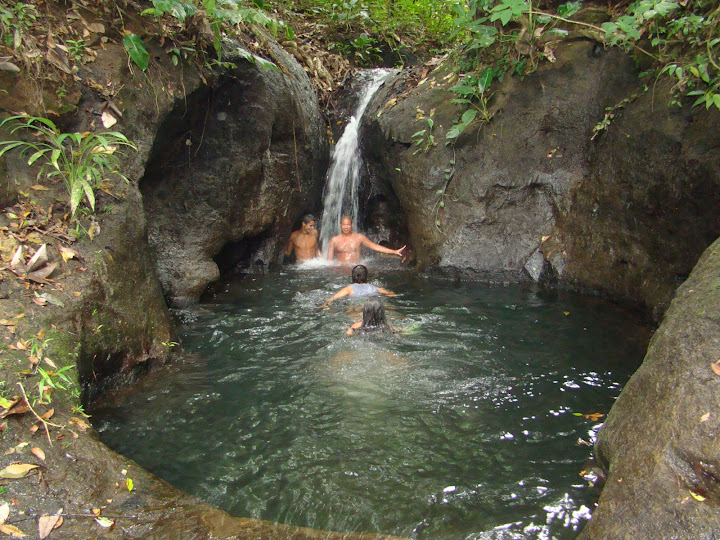
While waiting for our slot through the Panama Canal we went up the Chagres River for few days. Taking our boat up the serene river, banked by lush jungle was magical. We explored many side streams and openings looking for an elusive waterfall we had heard about. Every night we were serenaded by howler monkeys, a cacophony that kept poor Annie anxious and awake most of the night. Finally finding the waterfall on our last day, a little gem, where we swam and washed in the clear pool under the falls. Unforgettable!
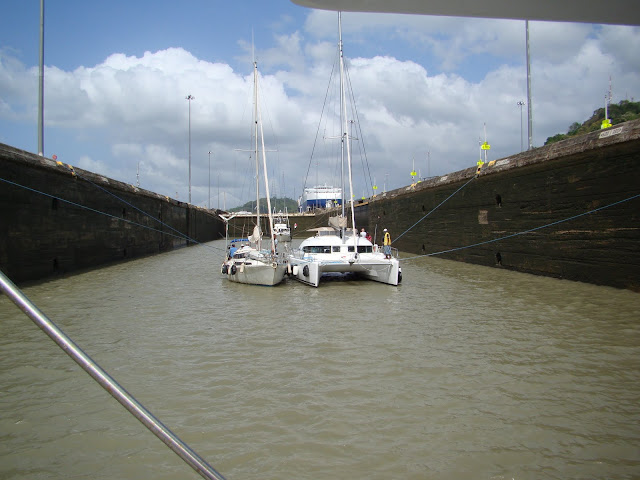
Panama Canal: Transiting the Panama Canal on our own boat was an awesome and unique 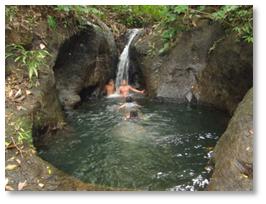 experience. John, Sam, Annie and myself acted as linesmen while Steve was the helmsmen. Being part of the process inside those gigantic locks was fascinating. Entering each lock level, watching the massive gates shut, controlling our boat and keeping it away from the walls as the turbulent water rose. Then at the top, spending the night on a
 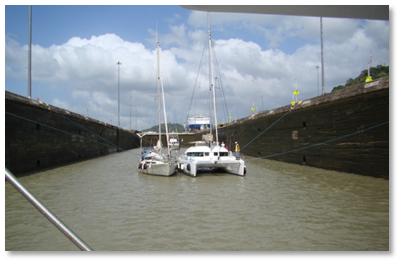 tranquil fresh water lake. The following day, motoring through lakes and man made channels, seeing with our own eyes what man has achieved. Finally reaching the other side and descending down the locks to the Pacific. Amazing!
Panama City: Although I wouldn’t say that Panama City was one of my highlights it was certainly a momentous place. Sam and Annie left us there to return to the States and college. Except for the old city its a pretty horrible place. However it’s a mecca for bargains and cheap shopping so was the perfect place to provision for our Pacific crossing. We spent days filling our boat up with excellent cheap wine and beer, dried goods, cans and luxury treats, snacks and gifts for children in the remote Pacific islands. With a much lower water line, we happily left Panama City and headed out to explore the waters of the Pacific for the first time.
Pacific side of Panama: Our first stop was the Las Pearlas islands, another set of beautiful islands. Considering these islands are only fifty miles from Panama City, they were surprisingly unspoilt and non commercialized. It was here we really learned how to anchor in tidal changes of up to 20 feet. What depth to anchor and the consequence of letting out too much or too little chain. At one place, we anchored at high tide only to find rocks popping up around us as the tide decreased. John slept up on deck keeping an eye on how near we got to the rocks as the tide went down. Fortunately there wasn’t any large boulders under us and our chain was just short of reaching the nearby rocks. Not our best anchoring moment.
Journeying along the Panamanian coastline we stopped at many remote and isolated anchorages. The coastal stops were not as nice as the islands but all were new and interesting to us. One of the most beautiful anchorages we’ve visited was off the Secas islands. Definitely in my top ten.
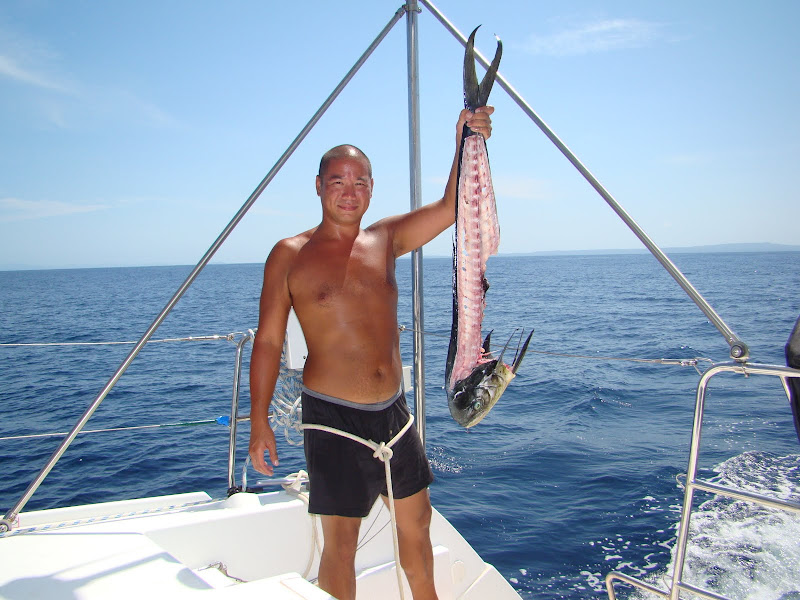
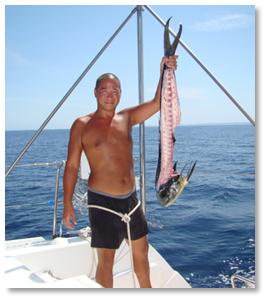
 For Steve and John, probably the most memorable event along this coast was catching nine fish in one morning. This was never to be repeated. As we left the coast of Panama the fish left us too. Since then on most passages, the catch has been zero.
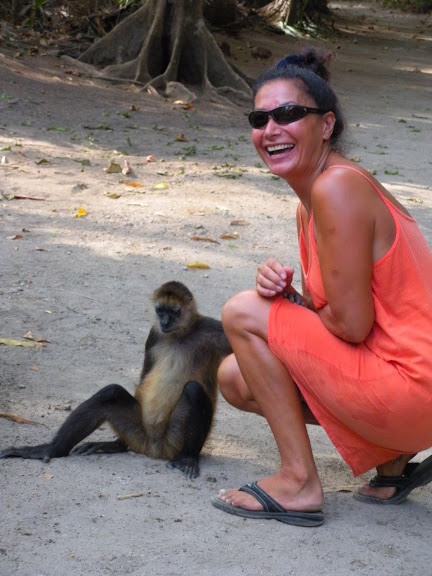
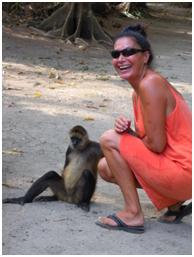
Costa Rica: This is the country where we had the most difficulty checking into. It took a day and half and a lawyer to finally clear us in. Having said that, once we were in, we really enjoyed our time here. Costa Rica is famous for its Eco tourism and fabulous national parks. Ella, John’s girlfriend joined us for a two weeks vacation and we explored the coast and nearby national parks with her. We saw plenty of wild life, especially monkeys and colourful exotic birds.
Later, Ben and his girlfriend Jess joined us for their Spring break. With them we explored the inland cloud forests and the area around the volcano, Mount Arenal. We also had a lovely time visiting with Jason Bell my ex colleague from Solomon Schechter Day school, who is now living and teaching just outside the capital of San Jose.
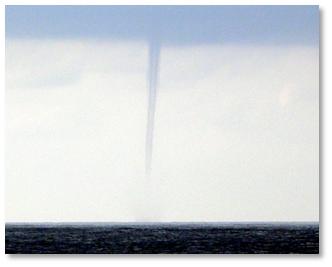
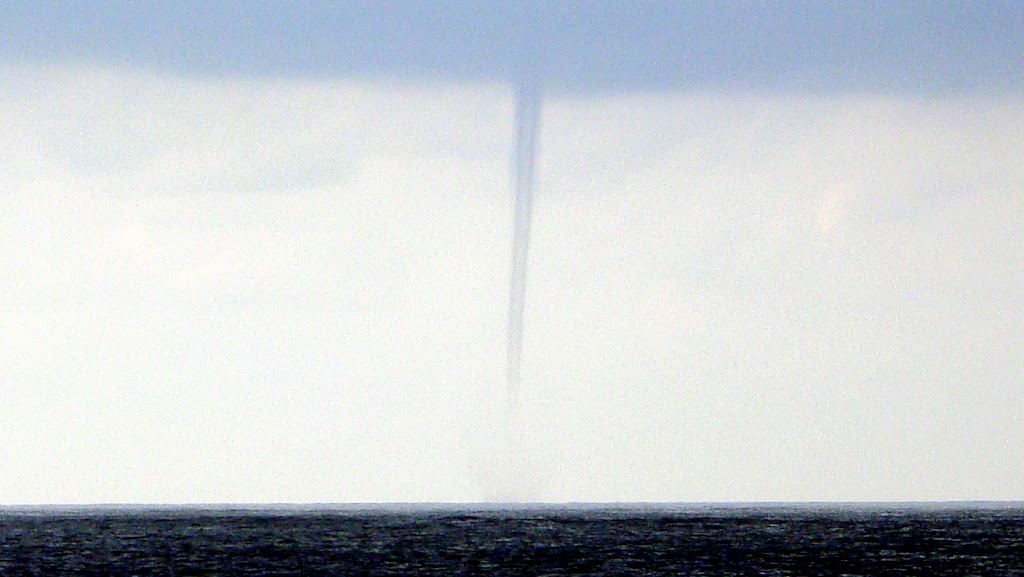
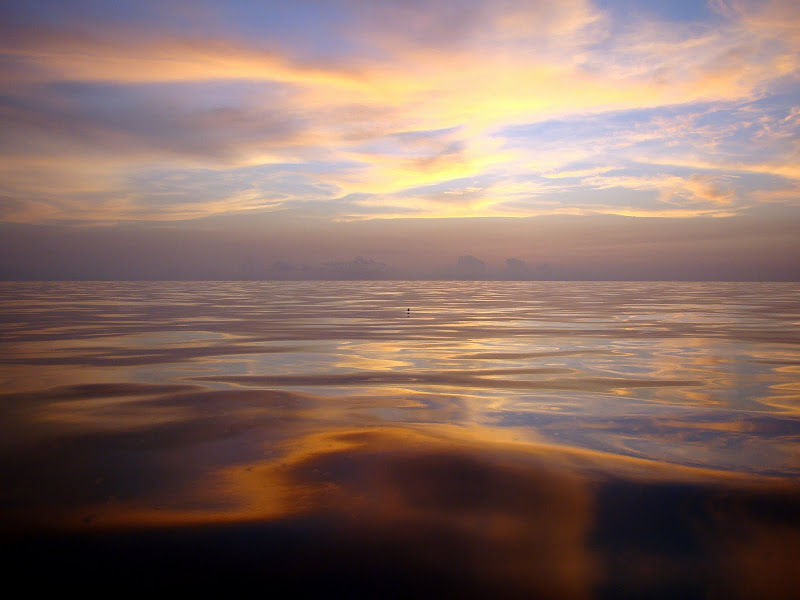
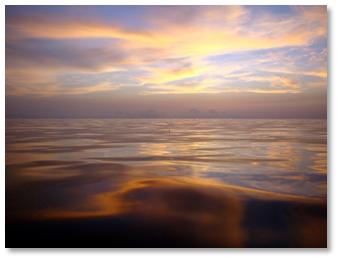 The Doldrums: During our 8 days crossing from Costa Rica to the Galapagos we had to avoid many squalls and a water spout (tornado) before we hit the doldrums. In the doldrums we had absolutely no wind, the air completely still, the ocean totally flat as far as the eyes could see. It was like floating on a clear blue silky mirror so utterly mesmerizing and beautiful. At Sunset, the red sun reflected itself over and over again on the mirrored ocean, turning the water into molten metal of gold, purple and red. Absolutely awesome and the most memorable sunset so far.
A migration of turtles passed us causing continuous ripples and patterns on the smooth water. At first we thought they were floating coconuts and then realised that they were humps of their shells. We must have hit their migration highway as hundreds passed us for hours going in the opposite direction.
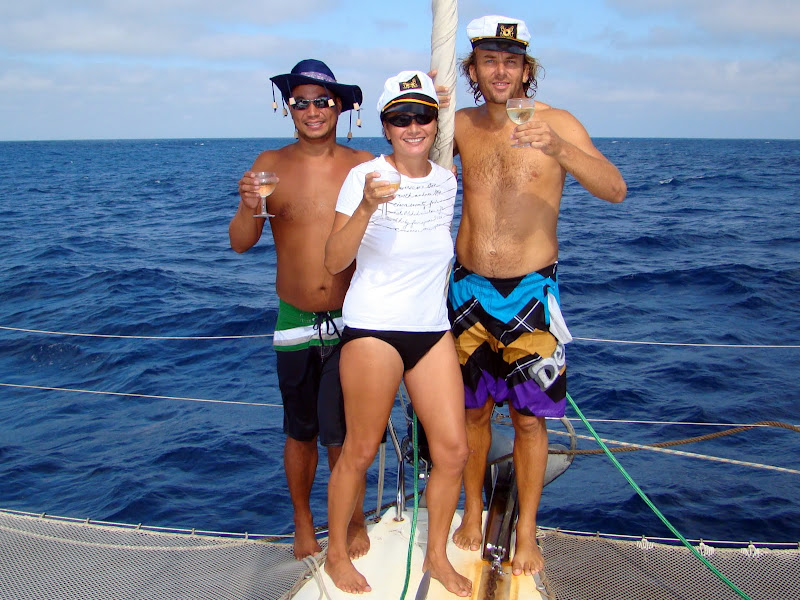
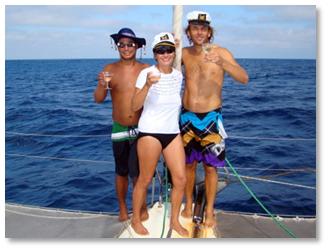 Crossing the Equatorial line: Once we cleared the doldrums our next milestone was crossing the Equator. Keeping with tradition we placated Neptune by throwing gifts into the sea. We didn’t dress up as many sailors do but instead we placed our boat over the imaginary equatorial line and swam across the Equator. To complete our celebrating we each had a glass of bubbly, the only alcohol we allowed ourselves during the eight day
  passage.
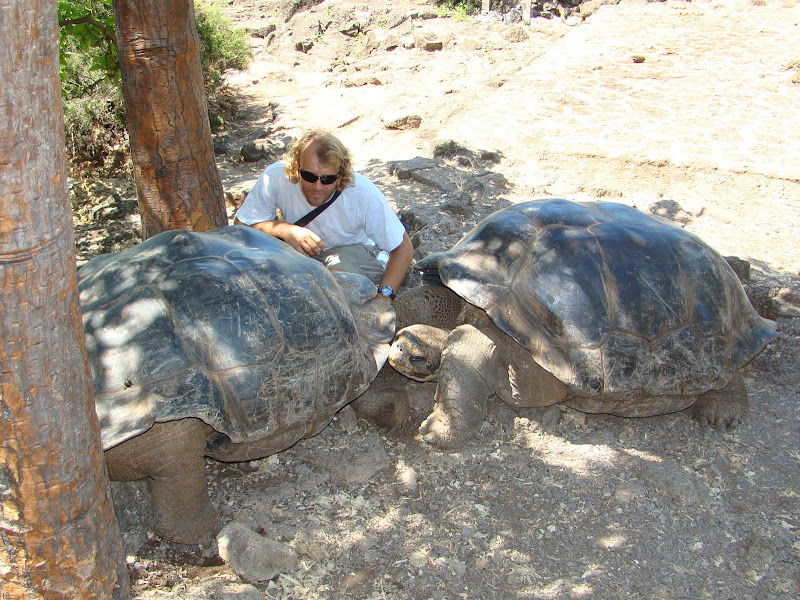
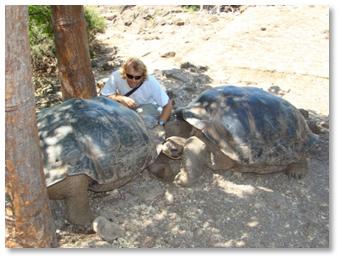
The Galapagos Islands: I would not describe the Galapagos as being beautiful. Dramatic is a better description with interesting basalt formation, long white sand beaches and striking lava flows. Most of the vegetation are cacti, bushes and small trees. For many people, including us, the unique fauna and marine life of the Galapagos is what we’ve come to see. And we certainly saw them. Giant tortoises, lava lizards, land and marine iguana. We scuba dive and snorkeled with hammerhead sharks, white tip sharks, sea lions, penguins, rays and turtles. A once in a life time place to visit.
The Big Pacific Crossing: Three thousand miles and twenty two days out at sea. It’s difficult to explain what goes through ones mind. Steve, John and I wrote a daily blog during this passage. Here is the link to these blogs if you interested in knowing a little of what was going through our minds while floating in the middle of a vast ocean. http://aboarddignity.com/blog/?cat=37&paged=9
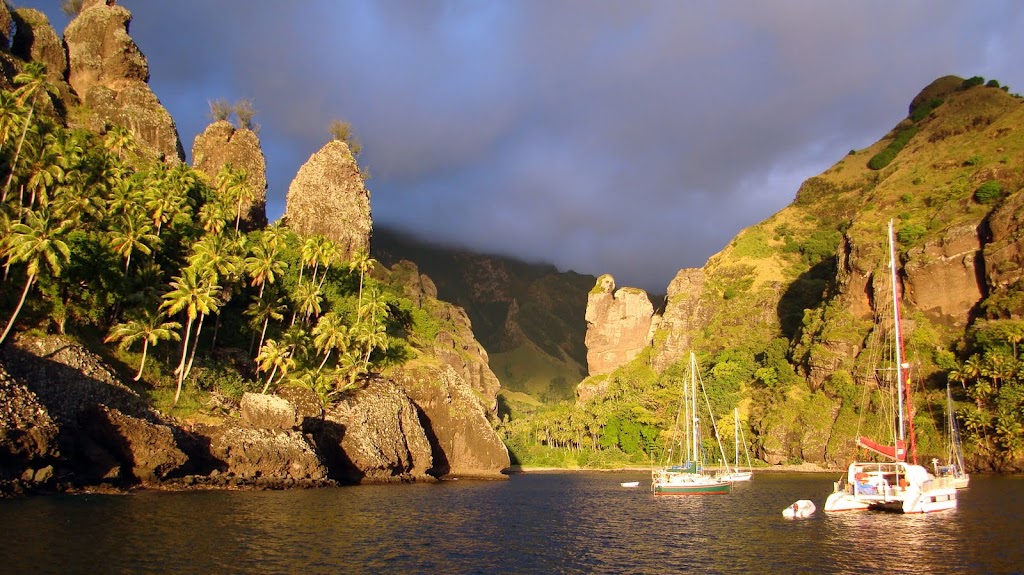
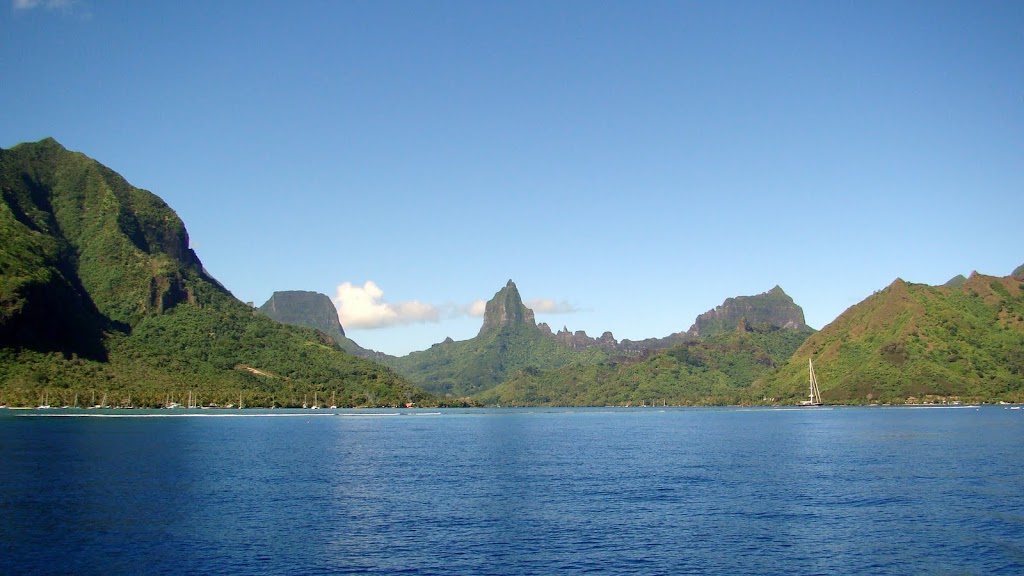
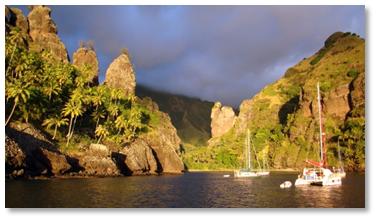 The Marquesas: How can I describe to you the thrill of our first land sighting after more than three weeks out at sea? I just can’t!!! Our landfall was the island of Fatu Hiva, a true paradise, with spectacular jagged mountains, open plateaus and lush deep valleys. We anchored outside a small village nestled in a fertile valley. The village was perfectly immaculate with each house surrounded by a profusion of tropical flowers and fruit trees dripping with oranges, grapefruit mangoes, papayas, breadfruit, bananas and more. Not only a paradise island but with a Garden of Eden too. The locals were full of smiles, children running over to chat to us, everyone welcoming and friendly. Throughout the Marquesas this was typical, with beautiful places, immaculate villages and friendly people.
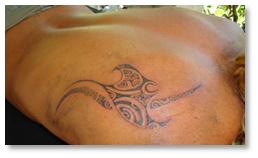
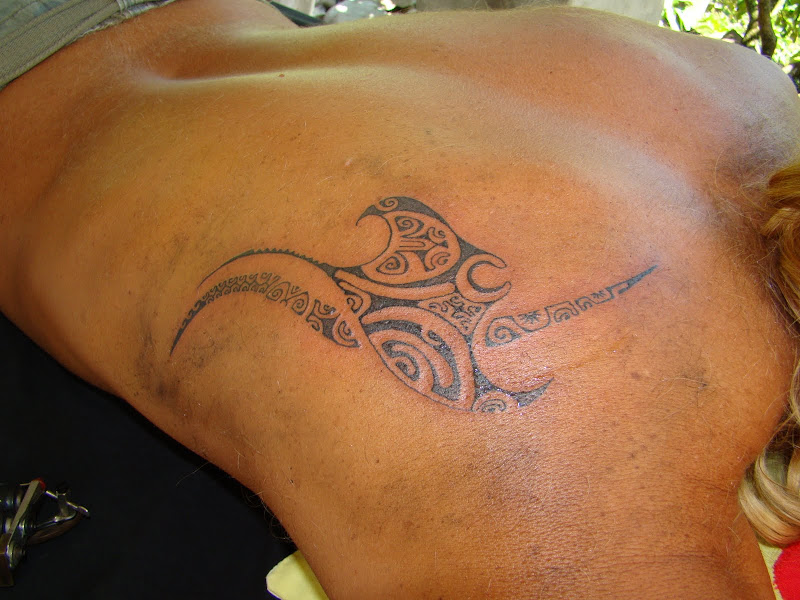
On the islands of Ua Pou, Steve and I each had a Marquesan tattoo done as a rite of passage. Tattoos are something I didn’t really approve of but Marquesan tattoos are very unique and special. We found an excellent local artisan called Kina who worked on our tattoos from his front porch. His house was up a hill, surrounded by a lush garden and a lovely view out to sea. Being in such lovely setting helped nullify the discomfort of being tattooed. The theme of my small tattoo was the waves and seas of the Marquesas with intricate motifs and symbolic meanings. Steve’s larger tattoo was a manta ray with a staff of life, again with detailed symbols. After finishing our tattoos, Kina invited us to share a delicious lunch with him. Before we left he insisted on picking us fruit for from his garden. We walked away with two gorgeous tattoos and two huge carrier bags full of tropical fruit. Just wonderful!
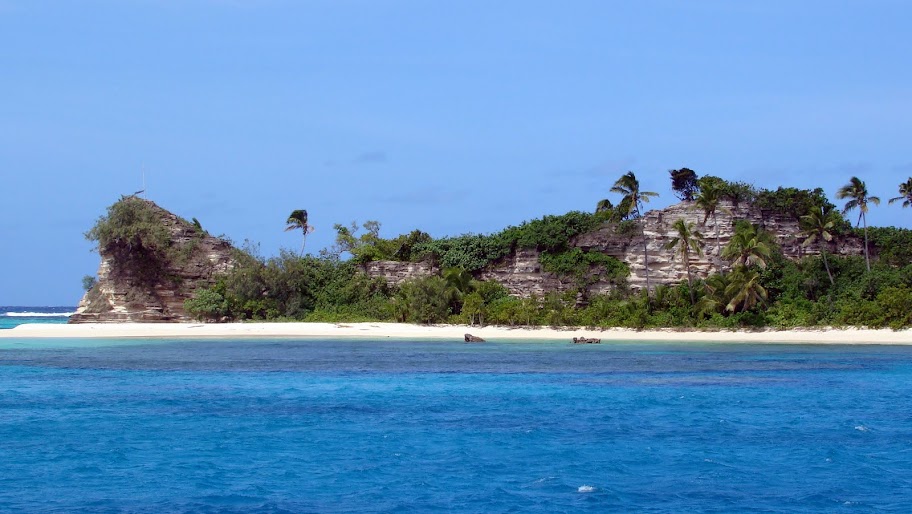
Tuamotus: The Tuamotus are an enormous arc of coral atolls. A true atoll is formed of unbroken circular reefs with an interior lagoon. Fortunately for us, many of the large atolls have one or two broken opening in the reef forming passes for boats to enter into the protected calm interior. These inner lagoons are stunning with turquoise clear waters and fringed with islets of golden sand and palms trees. However great care has to be taken entering and exiting these atolls. The current flowing in and out of these passes is very strong. During mid tide and bad weather, whirlpools and standing waves form in the pass making it very dangerous to enter. So timing for slack tide and careful eyeballing the pass is a must.
 Our first atoll entrance was pretty nerve wrecking. We were going at six knots, the counter current was four knots, so we were moving at only 2 knots and trying to keep away from the eddies that was to our port side. The water was so clear that the bottom looked a lot shallower than it really was. I think I held my breath all the way through the pass.
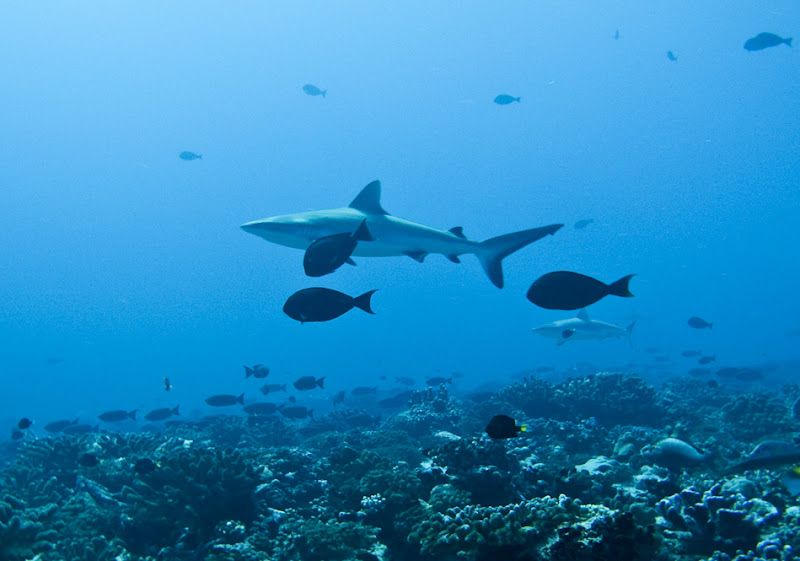
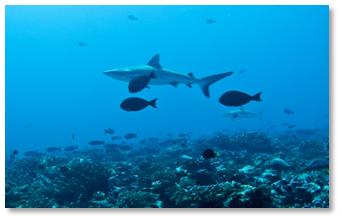
My favourite atoll was Fakarava. It had the best scuba diving and snorkeling we’ve ever done. The water was crystal clear, the coral life was immense and colorful and marine life abundant. Drift diving through the south pass was incredible. We saw dozens of sharks which wasn’t that many as many other divers saw hundreds. Fortunately these white and black tip sharks have no interest in us humans. No other snorkeling or diving sites has measured up since. We say we’ve been “Fakarava’d”.
We also visited a black pearl farm, the main industry in these atolls now. Fascinating to learn how they grow and harvest the pearls. Steve bought me a necklace with a lovely single black pearl for our wedding anniversary.
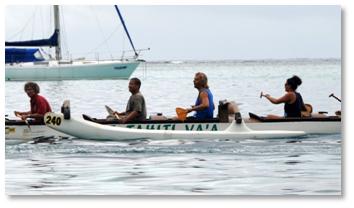
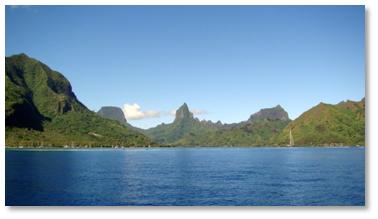 The Society Islands: Arriving in Tahiti after months of being in remote and undeveloped islands was a bit of a culture shock. We saw more cars in five minutes than we’ve seen since leaving Costa Rica. We spent nearly two hours in a supermarket just looking at all the things we could buy.
In Tahiti we joined the Rendezvous rally. This ended up being a three days fun packed event for us sailors. We met up with many old friends and also made many new ones.
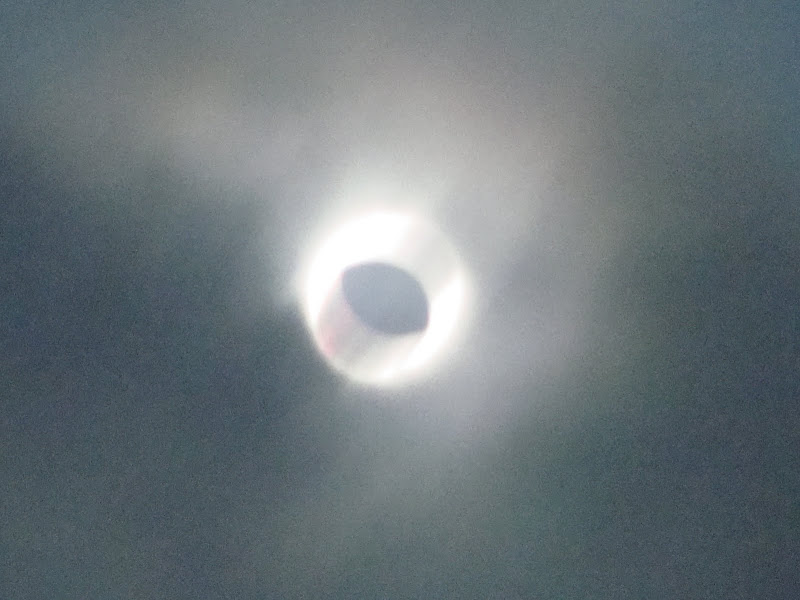
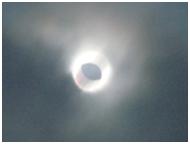 After the rendezvous John left us to return to London and the rat race. Since we had two weeks to wait before Ben joined us, we traveled down to the south coast of Tahiti. Here we discovered the beautiful unspoilt part of Tahiti. It was also the perfect place to launch ourselves out to sea to view the total eclipse of the sun that we had been anticipating for some time (four years in fact). We were able to sail out far enough to view the total eclipse for a full minute. Even though some thin clouds went over for part of the total viewing, it was still an incredible experience.
After Ben joined us we set sail to visit the rest of the Society Islands. Each one was beautiful and on each one we had our little adventures.
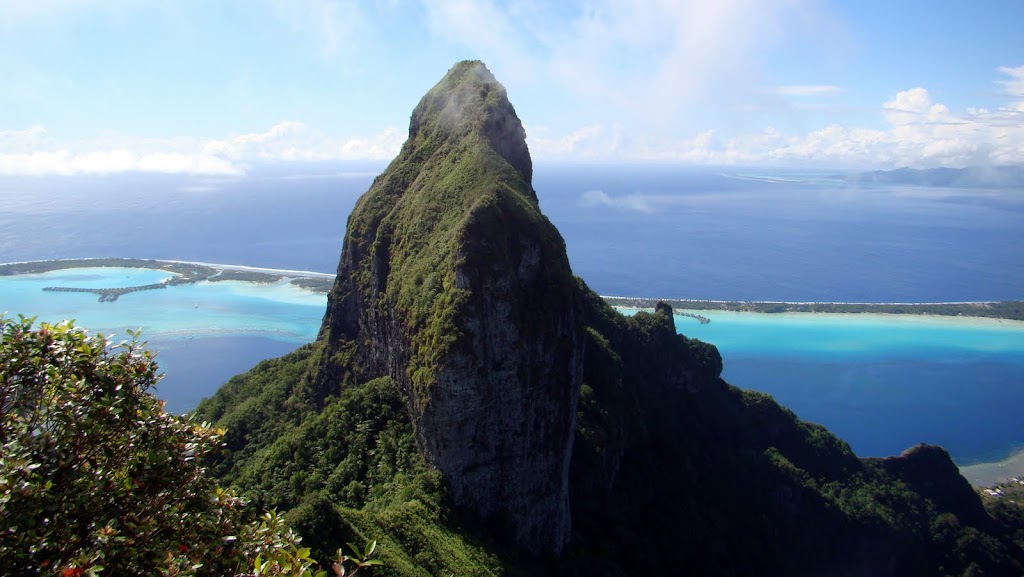
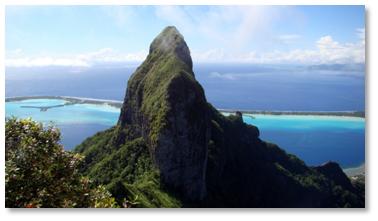 Ben celebrated his twenty third birthday on Bora Bora, considered the most beautiful island in the world. Even though
  it’s quite touristy now with a number of upmarket resorts, it’s still pretty damn stunning. O
n Ben’s birthday we climbed up to the top of Bora Bora. A challenging climb with ropes to help get up steep rocky surfaces and a long a ridge that dropped off on each side. The view at the top was brilliant and well worth the effort.
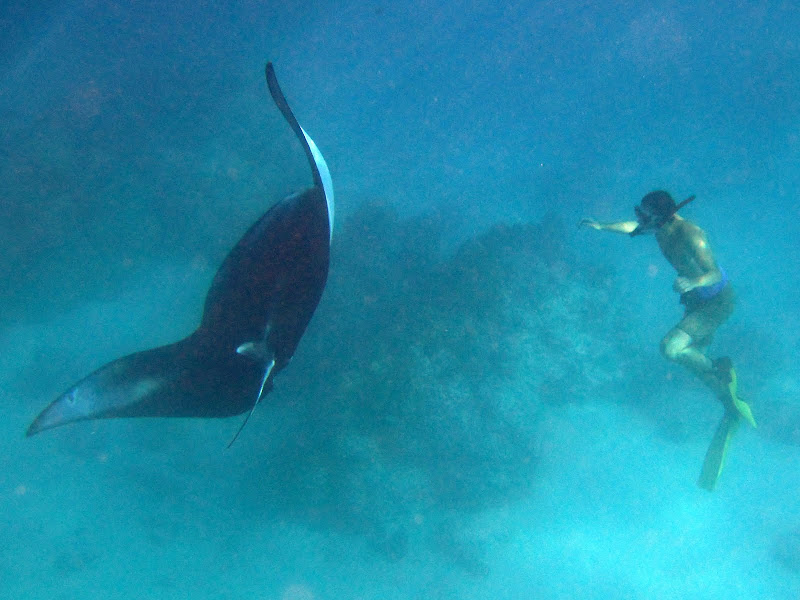
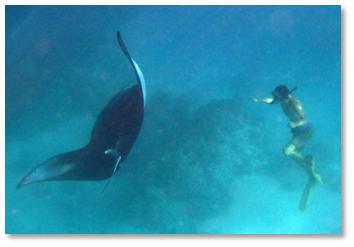
The last island we visited in the Societies was Maupiti, the most remote and unspoilt. Here we swam with these amazing giant manta rays. They must have been more than eight feet wide. Have I mentioned how often we see dolphins and whales? They often escort as we approach land, as if they’ve come to welcome us. Each time is just as thrilling.
 Cooks Islands: The passage from The Society Islands to the Cooks Islands took us four days. This was Ben’s longest time out at sea (so far) and he managed very well.
After more than twelve months of being in either a French or Spanish speaking country it was wonderful to arrive at an English speaking place. Dealing with immigration and custom was a pleasure and we could read every sign and information posters.
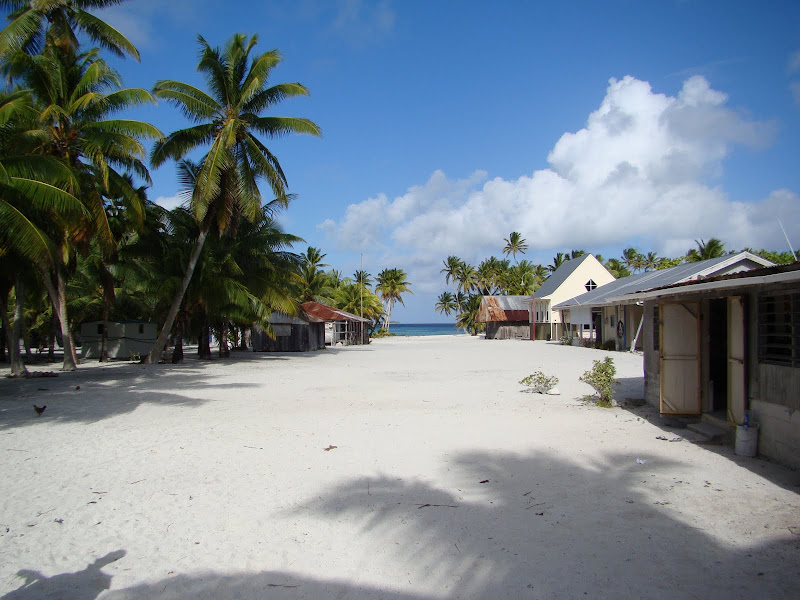
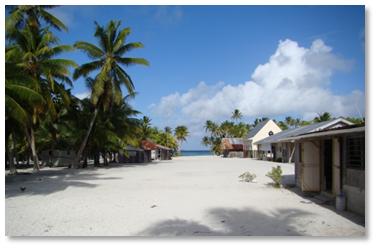
The most extraordinary island we visited in the Cooks was Palmerston Island. The inhabitants of this island are all descendents of William Masters an English man who settled in Palmerston with three Polynesian wives. The island has been divided up for the three branches of the family, each branch being descended from one of Williams’s three wives.
Two of the families vie to host cruisers who arrive on the island. They feed their guests, give tours of the tiny island, offer laundry and showers and generally make their visitors feel as welcomed and comfortable as possible.
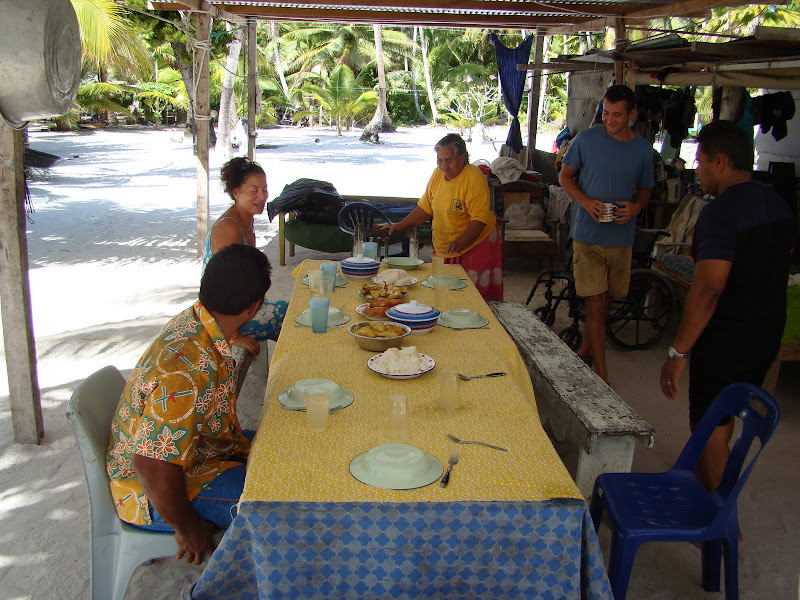
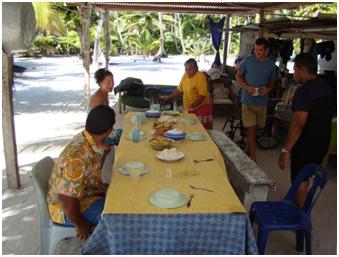 We were hosted by Edward and his family. Our six days at Palmerston were fantastic. We got involved in many of the daily routines and activities of the island. Ben and Steve went fishing and sea bird catching with Edward and his two sons. Ben learned how to husk coconuts properly, while I listened to Edwards’s mother tell stories of old times gathering copra and life on Palmerston when she was a girl. We help pluck and prepare the sea birds caught. Only Ben had a go at wringing one of the birds neck to kill it. We went to church with the family and had a special Sunday lunch of chicken and sea bird that we caught and prepared the previous day.
In exchange for their hospitality we offered them goods that we had on board. Since a container boat only visits Palmerston once or twice a year, they were thankful and in need of almost everything we could offer.
We gave them them fresh fruit and vegetables (much appreciated), tin food, dried goods and any treats we had to spare. We also gave Ed gasoline for his outboard, fishing hooks, our rusting 300 ft anchor chain and small electrical parts and small miscellaneous items. We fixed a couple computer printers that belong to the school and admin department and a lap top power supply of an extended family member. The island was a strange contrast of basic subsistence with quite advance computer technology!
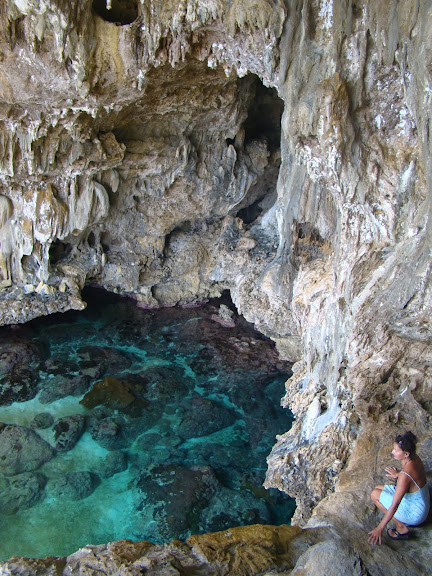
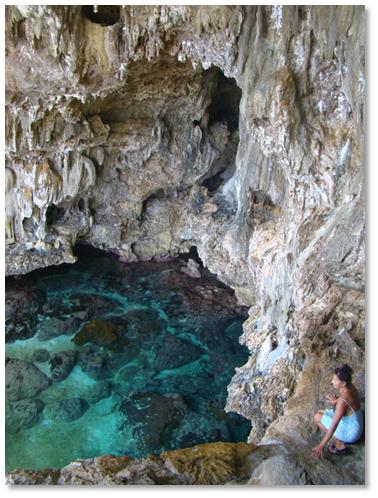 Niue: This Island is one of my favourite places. Being an uplifted atoll, faulting, weathering and erosion have created many crevices, chasms and limestone caves.
 It was absolutely delightful exploring this island. The massive limestone caves were astounding, each cave we visited unique with surreal formation of stalagmites and stalactites. We hiked through fantastic petrified coral forest and down into deep chasms with clear pools at the bottom. Swam and snorkeled in the natural pools formed on the coastal reef. We enjoyed great food in the relaxed and friendly atmosphere of the main town. At night we were serenaded by whale song from the nearby humpback whales. I even took courage and scuba dived among the famous Niuen sea snakes. Niue far exceeded our expectation. A must stop for travelers.
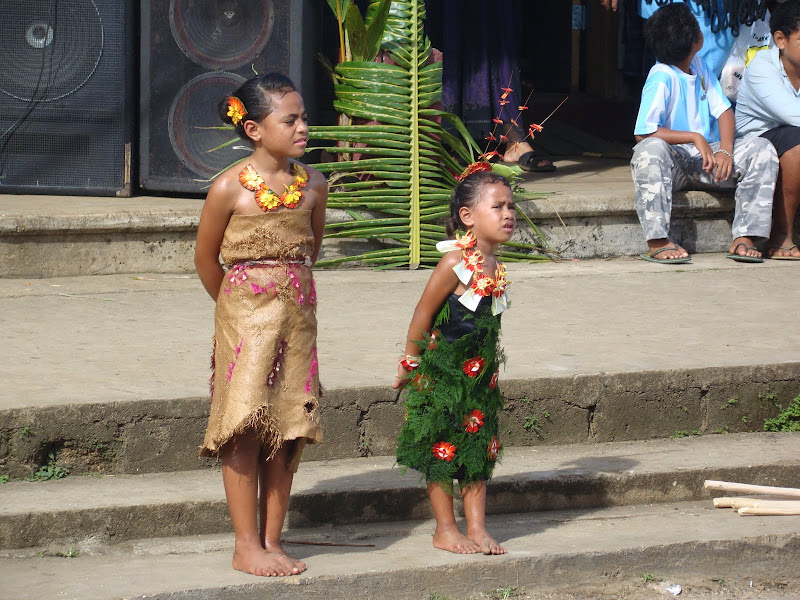
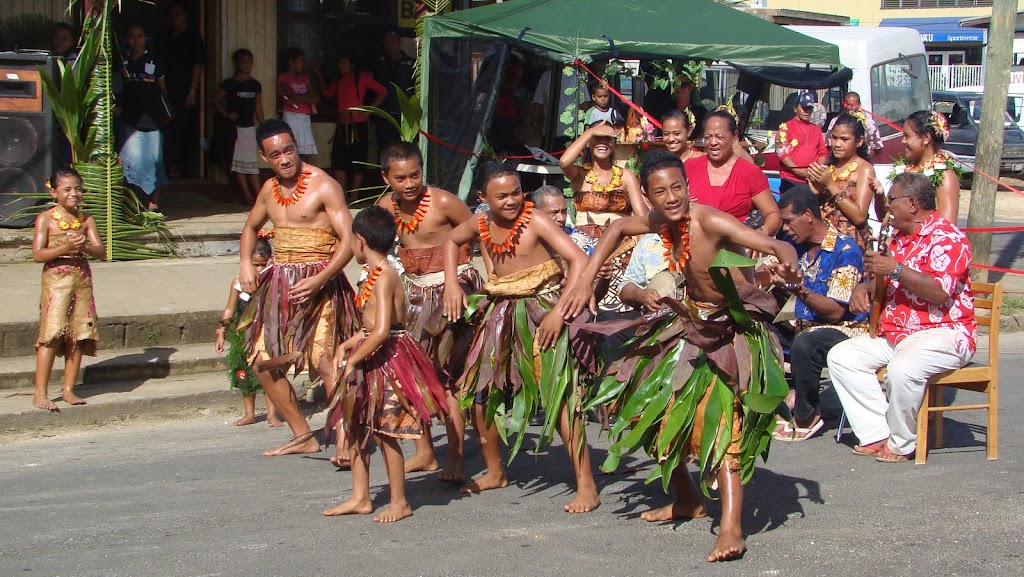
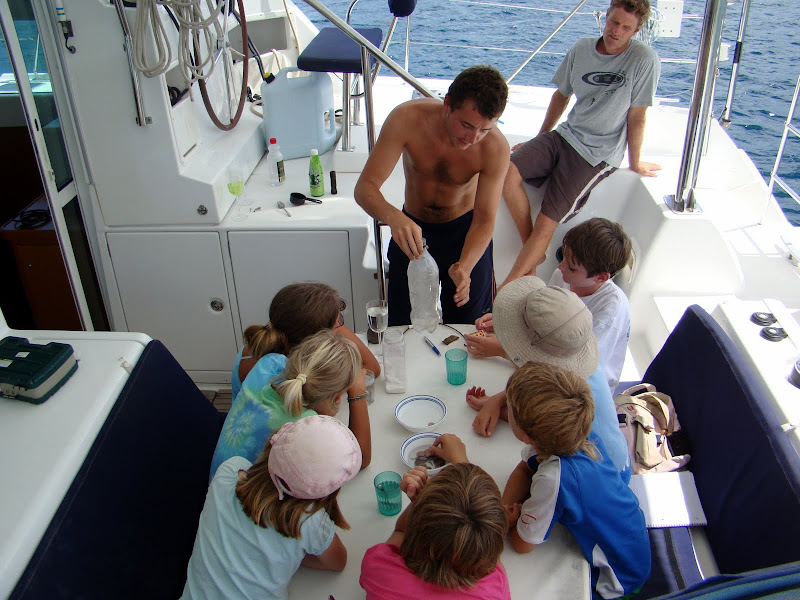
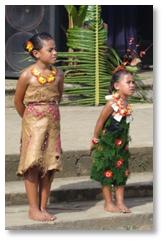
Tonga: Another favourite place. The Kingdom of Tonga is a perfect sailing ground with some of the most scenic and unspoiled groups of islands. Here we enjoyed the Vava’u Regatta, probably the most fun packed week we’ve had since starting our cruising life. Ben got recruited into helping with the Regatta and ended up having an amazing time and 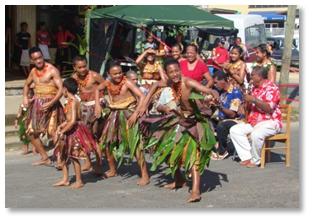 making good friends with organizers and locals. He also got the opportunity to teach Chemistry and Math to the children of other cruisers who were here during this get together time. Steve and I once again met up with many cruising friends, some we haven’t seen since leaving the other side of the Panama Canal. We were quite exhausted from socializing when we left Vava’u.
After our busy time in Vava’u, it was wonderful to relax and chill out in the distant islands of the Ha’apai group. While visiting one of these remote island we were invited for lunch by a local family. We were served a feast of lobsters, fresh fish deliciously fried in batter and local vegetables. While we ate our food, our host and hostesses fanned away flies from us and our food. We, as custom 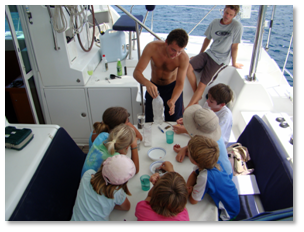 dictates, gave them small gifts to say ‘Thank you’ for their hospitality. The Tongans are really gracious and affable people.
I could go on and on about all the great moments and places. I feel I’ve only hit the tip of the iceberg.
Visiting wonderful places, seeing amazing sights, observing incredible wildlife, discovering unique cultures, tasting their foods and enjoying wonderful hospitality, is what cruising life is about.
There is the other side too. Continually maintaining and fixing our boat, struggling to get spare parts, dealing with difficult officialdom, language barriers and slow communication.
Other low moments were saying goodbye to John when he returned to England and saying goodbye to friends we may never see again. Also hearing about other cruisers who have severely damaged or entirely lost their boat. The worse was hearing that a young cruising friend of ours, just last week, died of a blood infection here in Tonga. It was only four weeks ago that we were sharing a beach fire and BBQ with her.
There are times when I long for land life again. A nice home and the comfort and security it provides. A familiar community with family, friends and good facilities nearby. These thoughts usually occur after an unpleasant incident, when things go wrong with the boat or anticipation of a difficult passage.
When I really think about it, would I give up this life of adventures, exotic locations, remarkable experiences, being footloose and fancy free, returning to a normal, mundane and predictable life on land.
No, I don’t think so! Even on land I remember feeling worried, insecure and faced risks just driving to and from work each day. The highs of the cruising life far far outweigh the lows.
The real question is. Will I ever be able to give up this life!!!!
 At 7am this morning we raised our anchor and were off. Inside the Tongatapu the winds were light so we gave the genset a final test to get us going. At 7:30 the systems were all switched off so I could run the morning’s Penguin net. Helen wasn’t overly pleased to be left helming in light air but she did fine. Because most boats had either just left or were about to leave the net was quick and we were done in 10 minutes or so.